Get weekly tips, recipes, and my Herbal Jumpstart e-course! Sign up for free today.
Sweet Woodruff Benefits with Lisen Sundgren
Share this! |
|


What if the medicine you need isn’t just in the plant—but in kneeling down to meet it?
Sweet woodruff (Galium odoratum) may not be as widely known as other plants in the herbal world, but as Swedish herbalist Lisen Sundgren shares in this episode, it holds a quiet kind of magic. With its delicate white flowers, an aroma reminiscent of vanilla, and a long history in European traditions, this woodland herb has been used to gently support the nervous system, ease restlessness, and mark the turning of the seasons.
But this conversation goes far beyond herbal actions. Lisen invites us into a deeper relationship with plants—one rooted in presence, patience, and reciprocity. From foraging in shaded forests to collaborating with chefs to create beautiful local, seasonal dishes, she shares how sweet woodruff became both a beloved herbal ally and a doorway into something even more meaningful: a sense of belonging within the natural world.
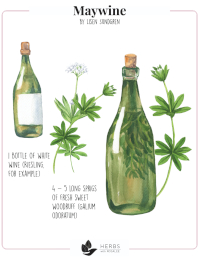
Be sure to download your beautifully illustrated recipe card for Lisen’s traditional sweet woodruff Maywine, a simple, time-honored way to celebrate the turning of the season. You’ll find a link in the section below.
By the end of this episode, you’ll know:
► Five ways sweet woodruff can benefit your health, from calming a wired mind to gently supporting the skin
► The surprising way its signature scent develops (and why it matters)
► Why less really is more when working with sweet woodruff
► How to work with sweet woodruff to create simple, nourishing skincare preparations
► Three tips for mindfully harvesting sweet woodruff
► How reconnecting with plants can support your nervous system in unexpected ways
► and so much more…
For those of you who don’t know her, Lisen Sundgren has created her path as an herbalist, forager, author, and nature and forest therapy guide for the past 30 years. We are nature and every single day there is more to learn from the depth of knowledge that plants have gathered for millions of years. What she learns, she shares, so that we can create a more sustainable, healthy, and delicious lifestyle.
To date Lisen has written eight books on various aspects of the use of herbs. She has inspired thousands through her books, through workshops and appearances in numerous TV and podcast appearances.
Since wild edibles made their entrance on the culinary scene, Lisen has been working closely with a number of progressive restaurants, and has trained chefs to use the wild harvest and to forage sensibly.
In the 90s she pioneered in the world of natural skincare with her brand, Lisen Organics.
Whether you’re sipping a fragrant infusion or simply sitting quietly beside a patch of green, may this episode inspire you to slow down, be present, and listen more closely to the plants around you.
Click here to access the audio-only page.
- 00:36 - Intro to Lisen Sundgren + Lisen’s plant path
- 21:02 - Why Lisen chose sweet woodruff (or how it chose her!) for today’s episode
- 27:56 - Maywine recipe: a celebration of spring
- 30:10 - Medicinal benefits of sweet woodruff
- 32:43 - Medicinal and culinary preparations for sweet woodruff
- 37:57 - The medicine in making connections with plants
- 44:02 - Tips for foraging and growing sweet woodruff
- 47:02 - Tips for working with sweet woodruff
- 50:45 - Lisen’s current herbal projects
- 53:05 - An herbal remedy Lisen would genuinely be sad to be without
- 56:46 - Student spotlight
- 58:01 - Herbal tidbit
-- TIMESTAMPS -- for Sweet Woodruff Benefits
Get Your Free Recipe!
l
Connect with Lisen:
- Website | LifeByLisen.com/English
- Instagram | @lifebylisen
- LinkedIn | Lisen Sundgren
Transcript of the 'Sweet Woodruf Benefits' Video
Rosalee de la Forêt:
Welcome to the Herbs with Rosalee Podcast, a show exploring how herbs heal as medicine, as food, and through connecting with the living world around you.
If you’re dealing with stress, tension or that wired-but-tired feeling, you might not think of sweet woodruff, but this humble forest plant has a long tradition of gently easing the nervous system. Today, I’m joined by Lisen Sundgren, hailing all the way from Sweden to explore the medicine, folklore, and seasonal traditions behind this springtime herb.
If you enjoy this episode, please give it a thumbs up so more plant lovers can find us and be sure to stay tuned until the very end for your herbal tidbit.
Tired of herbal overwhelm?
I got you!
I’ll send you clear, trusted tips and recipes—right to your inbox each week.
I look forward to welcoming you to our herbal community! Know that your information is safely hidden behind a patch of stinging nettle. I never sell your information and you can easily unsubscribe at any time.
Rosalee de la Forêt:
Lisen, I am truly so thrilled to have you here. Thank you for joining all the way from Sweden.
Lisen Sundgren:
Thank you. I am so grateful to be here. Thank you.
Rosalee de la Forêt:
I set my alarm for 6:00 A.M. this morning to accommodate an earlier morning. There’s a little bit of a time difference, and I have to say I have never been happier to set my alarm for 6:00 A.M. than it was to know that I was going to be seeing you. I’m just so grateful you’re here. Looking forward to this conversation.
Lisen Sundgren:
Me too. I’ve been looking forward to it for months. It’s amazing.
Rosalee de la Forêt:
I want to just briefly mention how we met because it’s like the best meet-cute and this is just from my perspective. So, we met in Italy, which was lovely. We were on a retreat with Rosemary Gladstar, and Helen was there, and Maria Noël Groves, and it was just so lovely. I had just really kind of started my walking at that time. I would wake up early and go on this walk up this little road that was by the castle where we were staying at. I’d walk up this road and I swear every time I walked up the road, I would meet you coming back down the road always with a bouquet of herbs in your hands. You were so radiant and so joyful. You were so excited and you’d be like, “Look what I found! There’s cleavers and nettles.” You were just so excited to share the herbs. I was—it was like the childlike joy. I love that knowing that you have been an herbalist for many decades and you still—that radiant joy bubbles up from you so effortlessly. Rosemary speaks so highly of you. She loves you so much, which is a testament within itself. That’s my—that’s my story. I swear I never saw you without fresh herbs in your hands. It was just wherever, that whole weekend, you were just always there for it. [crosstalk]
Lisen Sundgren:
Yeah, that’s so true and I remember they had wild lemon balm. Yeah, that was an amazing week.
Rosalee de la Forêt:
It really was, yeah.
Lisen Sundgren:
Yeah, so many amazing encounters with you and Ola and Rosalee. I mean, Rosemary. I hadn’t met Rosemary for decades when I saw her there, so that was amazing.
Rosalee de la Forêt:
Oh, really?
Lisen Sundgren:
Yeah.
Rosalee de la Forêt:
And we’ll get into this. Maybe now is the time.
Lisen Sundgren:
Yes, yes.
Rosalee de la Forêt:
You did study with her back in the ‘90s? Is that right?
Lisen Sundgren:
Yeah, yeah, I did.
Rosalee de la Forêt:
Tell us your herb story, Lisen. Let’s hear it.
Lisen Sundgren:
Well, yeah. Well, it’s long so I’ll take the short version. Herbs—I mean I grew up near nature, so plants were always around and abundant. Of course, as a kid, I was playing around and eating with sorrel and spruce buds and stuff, but it was in the mid ‘90s, I was living in New York and studying to be an actress. A very hardworking lady I was, and super, super ambitious, and never really happy with myself, just kept pushing, pushing, pushing. I mean it was amazing. Those were also amazing years, but I did come to a point where I became a nervous wreck and I was actually burnt out, but that wasn’t even a concept at the time, so I actually moved back to Sweden. I had lived in New York for five years and I got a green card. I was all set up to stay. Before that, I had lived in London and Paris. I was like big city girl, which is very strange to me today.
So, I came back to Sweden and I was really not in very good shape. I wasn’t sleeping at night. I was just twisting and tossing and turning and sweating and had all this anxiety. All that I—it was like my body pulled me out. I live by a near—I live by near—near a big national park in Stockholm, and I would go out every single day. It wasn’t like anybody told me. Nobody was talking about nature therapy. This was mid ‘90s. Nobody was talking about burnout and what to do or how to eat. Nothing like that. It was just pulled out. Every single day, I would go out to—because I needed a routine, so I would go out in the forest, in the park, and go to this place called Rosendals Garden, and have my lunch, and then walk back home. So I spent hours outdoors and I realized after a while that that was the only place where I felt safe and loved and not validated, because as an actress, everybody has opinions about the way you look, the way you dress. You know, “Cut your hair,” “Let your hair grow,” “Lose weight,” “Gain weight,” “Wear this. Wear that.” “Do this,” bababababa. And I was never good enough to anybody, but in nature and in the forest, everything was okay, and I was okay.
Eventually, because the doctors didn’t know what to do, they were like, “Eat your porridge and take your walk and you’re going to be fine,” and that wasn’t true. A friend of mine heard about or knew about a place called the “Vidar Clinic,” which was an anthroposophical clinic outside of Stockholm. She set up an appointment with me there. I remember my first visit with a doctor who was the first doctor who actually sat down, listened to me for over an hour, and then said, “Okay, so”—and I thought I was an actress. It was like, “I have to go out and audition and stuff.” He was like, “Okay, so I think you should come here and stay for two weeks.” I got really nervous because I was like, “No, I can’t miss an audition or anything,” bababababa. I mean, who was I? I was a nobody. Nobody knew about me, but—so I trusted him.
A few days later, there I was at the—and what they do in anthroposophical medicine—they only use—it’s all biodynamic food and plant material. It’s all about also—not just what you put in your body as far as medicine. It’s also, the rooms were all painted in different colors, and you got room chosen—a dedicated room depending on what colors you needed. I got a pink room and all natural materials, like wool blankets. It was really beautiful. After a couple of weeks—so I ended up staying a month. They were using all these plants and rosemary baths and paint therapy, and I had nature outside my window. When I was getting a little better and started to get interested in the world around me, I went outside to the herbal garden. I was like, “Hmm. Interesting with these herbs,” so I went to my doctor and I said, “So, what are these herbs you’re giving me?” He said—instead of starting to explain about the herbs, he took me to the library. They had a small library. He had spoken to the librarian and she had put together a pile of books about herbs for me, so I started reading these herb—these books because he was so smart, because instead of focusing on the sick part in me, he saw that my curiosity had come alive, and that’s life. That’s vitality, so he encouraged that. Yeah.
So, I read his books and then I started having opinions on what herbs I should have. He was—not only do they have— anthroposophical doctors have medical training like traditional medicine, as well as four years, I think, of anthroposophical medicine. I was like, “I think I should have this herb and this herb and this herb,” and he was like, “Okay. Go ahead. Go out, pick it.” I was like, “Okay. Can I use the kitchen to make tea?” and he was like, “Yep, fine.” I remember one night I was making peppermint tea. They had this fire burning. There was this common room where we could hang out. I made some peppermint tea about 10:00 o’clock at night. I made it really strong and I drank it, the whole pot. I didn’t fall asleep until 4:00 in the morning—because guess peppermint really wakes you up, right? I’m so glad I had that experience and that he didn’t say, “No, don’t do that because you won’t fall asleep because sleep is really important.” He let me get an embodied experience from peppermint. Now, I have that relationship with peppermint! That’s really where the herbs really came into my life in a very strong way.
Then I started working. I got an apprenticeship at that place where I had been—at Rosendals Garden. No. Before that I started working at a farm. For six months just living farm life, and then I came to Rosendals Garden. I got the apprenticeship and that’s where the herbs just really completely—sometimes it’s like you don’t choose. It’s like you’re just being chosen. I really don’t know why, but I guess I was in a really open, sensitive place, and the herbs just sucked me into their world. That’s where it started, and then eventually, I did this course on how to make herbal salves and the rest is a long story, but that’s really where it all began for real.
Rosalee de la Forêt:
Hey, there. Just a quick note: if you’d like to hear from me in a more personal way, I’d love to have you in my free text community. I send a couple of texts every week, things like behind-the-scenes updates, herbal thoughts that I’m chewing on, and little sparks of joy I don’t always share anywhere else. To join, just text the word, ROOT, to 1-509-383-8398, and if you ever want to break up, no hard feelings. Just text STOP to the same number and you’ll be opted-out immediately. My goal is to make it so juicy and so fun that you look forward to getting my texts each week. Okay, now back to the show.
I love this. You did a modern day convalescence, basically.
Lisen Sundgren:
Yeah!
Rosalee de la Forêt:
Yeah, that’s wonderful. I feel like if more people were able to do that, we’d have a lot more herbalists. Just your story is so beautiful. It’s kind of, I feel in some ways, unlike any herbal story I heard, you’re in this place of being burnt out and struggling, and then you basically, through your doctor, had a mentor who just saw your curiosity and your spark and just nurtured that through that. It’s really beautiful.
Lisen Sundgren:
Yeah, I’m really grateful to him. He was amazing. He’s no longer around us, but I thank him every day. He’s beautiful. And then I ended up staying at Rosendals Garden. I still teach there, but I ended up working there for 25 years.
Rosalee de la Forêt:
Oh, wow!
Lisen Sundgren:
Yeah. I eventually—so, I stayed—I worked there for two years and got all obsessed with the herbs and working the garden, and then I started working in their—they have this kitchen where we made teas and oils and stuff to sell in the shop. I worked there for two years, and then I was like, “Oh, no, but I’m an actress. I have to move back to New York,” so I moved back to New York.
Rosalee de la Forêt:
Wow.
Lisen Sundgren:
I know, it was crazy. Go back into the acting world and at the same time, I walked by the Open Center one night on Spring Street and found that they had an herbal program called “Green Medicine” with a woman called Peeka Trenkle and I just signed up for it. I had done some studying in Sweden as well before I left, so it wasn’t completely—I’d studied for a year in Sweden. I signed up for it and Peeka, she was a beautiful lady. She also became my therapist and she was very smart and wise, and became my mentor. She invited guest teachers, so we had David Winston and Christopher Hobbs, and all these amazing people, and of course, Rosemary Gladstar. She’s told me that that’s the one and only time that she’s been in New York City.
Rosalee de la Forêt:
Oh, no way! Wow!
Lisen Sundgren:
And I was there!
Rosalee de la Forêt:
Well, I’ve never been, so-
Lisen Sundgren:
Oh, you haven’t? Oh, my God.
Rosalee de la Forêt:
I never have. I would assume because Rosemary is so well-traveled that she’d been there many times.
Lisen Sundgren:
Yeah! I remember being so taken by her. That whole program really opened my eyes to—I had studied for a year in Sweden along with working at Rosendal. The studies here in Sweden were very focused on disease and treating this and treating that, but working with Peeka, and eventually, I did Rosemary’s program, I realized that to be an herbalist is a whole—it’s a way of life. It’s about relationship with people, with the planet, with food, with everything. It’s about life.
So, I had one foot in the theater world and one foot in the acting world. I was set to do this reading of a theater—of a play, of a Swedish playwright in New York. A Swedish director came from Sweden to direct it. I was reading the lead and I was like, “Oh, this is exciting, a big role,” but it just—my body just closed itself down. It just didn’t work. The director was like, “We have to—we have to stop this. We can’t do it,” but—so the producer called me one night before an herbal weekend with Peeka Trenkle. She called me and said, “We have to have a talk.” I knew in my mind—I was like, “I’m fired, but I’m not going to let that affect this weekend because this is what I love,” so I did the weekend with her, and that was a weekend of making tinctures and oxymels and all that fun.
I went to my producer friend. She was a dear friend of mine. She met me in the door with two glasses of wine and I thought, “Uh-oh.” She said, “I’m sorry John feels that he—he can’t go on with this production because he can’t push you,” blah, blah, blah. First, of course, I felt really disappointed and like I let everybody down, but the next moment I was like, “I can go to Tibet and meet the monks,” because I was into Tibetan Buddhism, “and I can be an herbalist!” That same night, I went home to my apartment and threw out all my headshots and called another director friend of mine and said, “I’m no longer an actress. I’m going to be—I’m an herbalist now.”
Rosalee de la Forêt:
Wow! Oh, I love the drama of this.
Lisen Sundgren:
Yeah, I know. So then, I finished the programs that I was studying here—over there in New York and then I went back to Sweden, and I was an herbalist.
Rosalee de la Forêt:
Wow! Oh, that’s such a good story, Lisen. I love the finality of it too. ”Headshots out. This is my new life.”
Lisen Sundgren:
Yes, yeah, and I loved coming back to Sweden and not worrying about what I looked like and stuff, and then I came back to Rosendal and started working there, and became the herbalist in residence, and started teaching.
Rosalee de la Forêt:
And you’ve taught. You’ve written eight books-
Lisen Sundgren:
Yes.
Rosalee de la Forêt:
Which is very impressive. I’ve seen them in Swedish and it’s so beautiful.
Lisen Sundgren:
Thank you.
Rosalee de la Forêt:
Some of them anyway—those that I’ve seen. You’ve been on TV as a proponent for the plants and been a teacher, so really, just your whole life just took off into the herbal world.
Lisen Sundgren:
Yeah, it did, and every time I’ve tried—because it’s not easy every day, you know, and also because now, herbalism has really exploded. It wasn’t like that. I remember making—doing my first herbal walk, wild plant walk and I think three people showed up, and it was raining. Now, it’s like everybody’s doing herbal walks and teaching foraging. Many times, I thought I’ve got to do something else, but every single time I’ve been pulled back to the herbs.
Rosalee de la Forêt:
They called you. They’re not letting go.
Lisen Sundgren:
Nah.
Rosalee de la Forêt:
Thank you so much for sharing your story, Lisen. That was-
Lisen Sundgren:
Thank you.
Rosalee de la Forêt:
Very fun to hear and I’m so glad that the plants caught you and pulled you in.
Lisen Sundgren:
Yeah.
Rosalee de la Forêt:
Hey, it’s Rosalee. You know, creating this podcast has been one of the most rewarding parts of my herbal work, and if you’ve found something meaningful here, whether it’s a new perspective, a favorite recipe or just a sense of calm, I want to let you know there’s a good way to go even deeper. It’s called the Podcast Circle. Inside, you’ll get access to live classes taught by some of my favorite herbal teachers, behind-the-scenes updates, and a beautiful library of herbal resources that we’ve gathered over the years. But more than that, it’s a space to connect with fellow plant lovers who care about the same things you do, and truly, your membership helps make this podcast possible. It’s how we keep the episodes coming and the herbal goodness flowing. So, if you’re ready to be part of something more, something rooted in connection, head over to HerbalPodcastCircle.com. I’d love to see you there.
Lisen Sundgren:
One of the things that—that when I think about my life, is the adventures that they take me on, and the travels, and the people I meet. Now, we met in Cincinnati last year and in Italy two years ago, and meeting all these amazing herbalists. I’ve traveled in South Africa and in Poland, and just meeting all these—they really take you for a ride.
Rosalee de la Forêt:
Yeah, that’s so true. I also have appreciated that and I’m excited to see you in Sweden in a couple of months.
Lisen Sundgren:
Yes!
Lisen Sundgren:
I cannot wait. I cannot wait.
Rosalee de la Forêt:
It was so lovely to see you at the International Herb Symposium last year in Cincinnati. I remember just looking at you when we were hanging out in the living room, at one point, and just thinking, “Lisen is just so sophisticated.” Now, I see the actress New Yorker in you.
Lisen Sundgren:
Yeah, yeah.
Rosalee de la Forêt:
I’m really excited for the plant you chose because this is the first time sweet woodruff has been on the show. It’s one I haven’t worked with a lot either, and so I feel like I’m about to be inspired. I love to start with just wondering or asking you why did you choose sweet woodruff?
Lisen Sundgren:
Well, it’s—when I got the question what plant to talk about, I thought, “Okay, everybody—a lot of people have talked about nettle and hawthorn or rose, and all those other favorites, and linden flower, and so I thought I’ll just ask the herbs. So, I sat down, just closed my eyes just to see who would show up first, and it was sweet woodruff! I was like, “Okay, lovely, but it’s not the one I use most for medicine although we go way back. We have a long relationship.” Then I sat down again and I thought, “Okay, anyone else?” Sweet woodruff was like, “Sweet woodruff!” So, I thought—so, I thought, okay, if that’s the one who—because I do that sometimes when I guide a walk, for example. I always prepare by taking a little walk before people come and ask who wants me to show—and they show up.
So, sweet woodruff it is. I’m actually glad I stuck with it. Then I shared a recipe and I thought this is too simple. Everybody is sharing all these amazing recipes and—but there is a story to it. I first—and come to think of it now, it’s fun but it’s a European herb. It’s originally from Europe and I think Western—Western Asia, so that’s fun. It has a long history in Europe, but also, my history with it is that when I began learning about wild edible plants beyond dandelion and nettles, I met sweet woodruff and I was just completely enchanted by her. Have you ever—have you ever smelled or used or met sweet woodruff at all?
Rosalee de la Forêt:
Only dried, never in person.
Lisen Sundgren:
Well, in person, she’s just—she blooms in May and spreads out big carpets of flowers. She has these tiny star-shaped flowers that—it looks like they’re dancing above the greenery and is just really beautiful. She has this beautiful smell. Yes, so you smelled her with—with the dried—she smells like tonka bean, vanilla. Every year when sweet woodruff blooms, it’s like I know that spring is here for sure. There’s no turning back to winter. She’s part of my celebration of spring.
Another history with her is that—I don’t know how many years ago—maybe 15 years ago, I was walking down the street in Stockholm and I met a friend of mine who was a budding gardener. She told me about how her boyfriend and some friends were opening this restaurant, and they were looking for somebody who could find them some sweet woodruff. I was like, “I can do that,” so one night, I booked a table. I went there with a friend and filled my handbag with sweet woodruff, fresh because it was my-
Rosalee de la Forêt:
Yes, as herbalists do. It’s normal.
Lisen Sundgren:
Yes, as we do, yes. So, I went to the restaurant and I said, “Hi, I’m a friend of Hannah’s and I heard you needed some sweet woodruff,” and I pulled it out of my handbag, and that was the beginning of a nine-year long work relationship. (They closed after nine years for various reasons.) At that time, the New Nordic—the New Nordic Kitchen was a big thing in Sweden, which meant using what’s local, in season. I started working with them and also with other restaurants. That was a really fun time for me because I wrote a book called The Wild Kitchen, about that time was when the Nordic Kitchen started bubbling and chefs were interested in not only did they want to take the bike to the nearest farm and get their carrots, but also to use the wild plants around them. They just didn’t have much knowledge and I did. Working with Volt gave me an opportunity to work with other restaurants like Gastrologik and Mathias Dahlgren and all these amazing places. That really was—I learned as much as the chefs did because it was amazing too. I would go out and forage, and then take my bike and go to the—and cycle to the various restaurant kitchens with my all my plastic bags, and I’m like, “Here.” And then they created all this amazing food with plants that people don’t even see. So, speaking about sweet woodruff also brings me to the topic of foraging, which is a big thing for me using wild plants. So, that’s why—why sweet woodruff-
Rosalee de la Forêt:
Calls out?
Lisen Sundgren:
Calls out, yeah.
Rosalee de la Forêt:
Well, about the foraging, one thing that just strikes me about that is that there, for a while—and probably still continuing—there was this surge and this interest in wild plants in the chef’s realm, then there was all these horror stories of these plants just being wiped out, people going just wiping out ramps and other sensitive species in that regard. How wonderful is it that they had a resource that someone who’s connected to the earth who understands foraging ethics, because that’s a beautiful relationship and who knows how many people were inspired by those delicious meals as well, so yeah, I love that.
Lisen Sundgren:
Yeah, we’ve had that problem in Sweden too. It really makes me—it drives me crazy. I’d hear horror stories about ramps and—so I’ve done a lot of teaching chefs and I would always be very adamant about consciousness and-
Rosalee de la Forêt:
Limitations.
Lisen Sundgren:
Foraging—yeah, yeah.
Rosalee de la Forêt:
I’m so glad that sweet woodruff called out to you. It was a beautiful story. I love hearing about how beautiful sweet woodruff is when it’s blooming and how sweet woodruff is a part of your spring celebration too, because spring—for those of us who live in the North and in the snow, those first signs of spring are so important.
Lisen Sundgren:
They are. One way of celebrating is I make the Maywine. I’m looking here in my papers because I have to find—this is a common herb in Germany. There was a—this monk in 840 something and his name was—his name was actually—found it—I will find it. He made this wine with—with—he would put—I can’t find his name now, but that’s okay. He put sweet woodruff in white wine and let it sit for a little while. I usually let it sit for two to eight hours, depending on how much time I have. Just a sprig or two because a little goes a long way, put it in the fridge, let it sit, and then I drink it. That toast is like a celebration of life and welcoming spring and feeling gratitude. In Germany, that was part of the Beltane celebration which is on April 30th or last of April, which you will experience when you come to Sweden.
Rosalee de la Forêt:
Yeah.
Lisen Sundgren:
Yeah. It’s nice that it has this long history and there in Germany, it would bloom that night or around that time, but it blooms a little later in Sweden, like mid-May.
Rosalee de la Forêt:
I see. That’s lovely. I like how you called for riesling here. I lived in Nancy for a while, which is Eastern France—that switch back and forth between Germany and France a bit, but I always think of that area, at least, with the rieslings and I could see that being a wonderful spring celebration.
Lisen Sundgren:
Perfect, yeah. It’s perfect. It was—so, the thing about sweet woodruff is today it’s not used so much medicinally because it’s actually banned in some countries to use for food stuffs and medicine because of the coumarin content. However, cinnamon has coumarin in it. But anyway, so—but it was used as a nervine and to treat insomnia, but also liver, gallbladder, inflammation, heart. It was also said to be the “cheering herb.” It was also used as an aphrodisiac.
Rosalee de la Forêt:
That lovely smell, I could see that being associated.
Lisen Sundgren:
Yeah, yeah. It was used both for sleep and aphrodisiac, and used as—and as a strewing herb—just strew for fragrance in rooms, but not just for fragrance but also as an insecticide, which is interesting because apparently studies show that it’s actually quite an efficient insecticide. You can use it the way you use lavender. I use—combine—I combine it with lavender in little sachets and you can use it in potpourris.
It’s interesting that it was used as a liver remedy because it’s now considered not so good for the liver, but—so if you want to use it, use it with caution, but it doesn’t kill you. It can give you a headache. It can get you nauseated—nauseated, and when you use it medicinally for, say, sleep, use it for a short period of time, and really, a little goes a long way. It gives a lot of flavor and it’s quite potent. I love using it as infusions. You can also use it as skincare because it’s an astringent. It was also used to treat hemorrhoids and weak veins, so it’s astringent. Also, for your skin, like wrinkles and stuff. I don’t like to call it “wrinkles.” I like to use it—call it—I don’t know what—“life marks.” So, I use it in creams, which is very lovely. I make an infusion or you can also make an oil with it and use it in creams and stuff.
Rosalee de la Forêt:
When you infuse it into oil or other preparations, do you have any strong preferences for fresh or dried?
Lisen Sundgren:
Actually, dried is really good because the drier has more fragrance. But when I make the—when I make the wine, I use it fresh. Again, I’m quite practical when it comes to herbalism. If you have the fresh stuff, use it. If you have the dry stuff, that’s what you use. It has very little liquid in it. It’s quite a dry herb, so there’s no problem making an oil with it and worrying about it getting moldy or anything.
Rosalee de la Forêt:
I’m very fascinated about using it as an oil because I just—I love oils so much and for that smell in an oil sounds really lovely.
Lisen Sundgren:
Yeah. Oh, I wish—maybe I—if I can get some dried before you get here, we can make some oil. That would be amazing.
Rosalee de la Forêt:
Oh, that would be lovely, yeah.
Lisen Sundgren:
Yeah, yeah, because I’m also big on oils.
In herbal infusions for sleep, combine with maybe some chamomile. But mostly, what I use it for, actually, is food. In Germany, it’s used as a synthetic flavor because it’s banned, but in candy and ice cream and jellies. I’m not sure about—I don’t use so many jellies, but then again, it’s sold at the Farmers Market as a fresh herb, so you can-
Rosalee de la Forêt:
Oh, really?
Lisen Sundgren:
Yeah. That’s kind of interesting, but I use it—and this is—I learned so many tricks from all the chefs when I was working with them. One trick is to put fresh or dried sweet woodruff in a bowl and then you add cream to cover, and then you leave it overnight in the fridge, and then the cream, because it has both water and fats and acid, it will pull out the—the flavors, and then you strain it, and then you can make either ice cream from it or you can whip it and serve it with rhubarb pie because rhubarb is in season at the same time as sweet woodruff.
Rosalee de la Forêt:
Wow, that sounds amazing.
Lisen Sundgren:
It is amazing, and you can also—it’s actually a favorite among chefs. I still work with a chef who lives upstairs from me now, it’s very funny. He has a great restaurant and he makes this great sweet woodruff ice cream. You can also use sweet—sweet vernal grass, but he says it’s really difficult to teach his staff to use it because often they use too much of it. It really gives off a lot of flavor and can be a little overwhelming, so just a little goes a long way.
Rosalee de la Forêt:
Speaking of that, because you are mentioning these like it might be a little tough on the liver or there are some reasons why it’s been banned because of the coumarins, do you think that’s a dosage situation, like people might be having so much? How serious do you take these warnings?
Lisen Sundgren:
I think it’s a dosage thing and I think also, apparently, there was a study made on rats and mice-
Rosalee de la Forêt:
Okay.
Lisen Sundgren:
And it didn’t—it wasn’t very good for them, apparently, but then—but there is no—nothing shows—I mean, I haven’t seen any studies showing that it is dangerous for people. It’s just based on that study on rats and mice.
Rosalee de la Forêt:
I see.
Lisen Sundgren:
But I—I would say with all coumarin plants, be mindful. It’s the same with—with cinnamon. Use it for short term and use it in small doses. As food, there is no—no problem. In fact, I’ve found it has—I think it was in PubMed. It said it has—”however, not been found to be harmful to humans even in large doses, in which it follows a different meta—metabolic pathway than in mice and rats.” So, it’s likely safe when used in food, and possibly safe when used in medicinal—medicinal amounts short-term, and it can cause headaches, and the liver damage is when used long-term. The thing also what I love about herbs in season is that if you use herbs that are in season, you’re not going to use them long-term, so you use a little bit of that and then the next time, maybe use chamomile. You can always rotate your herbs.
What I love about sweet woodruff and why I wanted to mention it also is that in foraging is what—there’s something so beautiful about—growing herbs is great, but when you have to go out and actually look for them, and learn where they grow—sweet woodruff is a woodland herb, right? It likes to live in shady places where the sun filters through the leaves and moist, rich—loves moist, rich soil. We have to learn—you have to come back everyday to the same place and see. Is it in bloom now? Is it in bloom now? You have to be really patient. You have to go down on your knees and sit with it, and treat it very gently because it has this very fine stem. It’s not like its relative, cleavers, that has a more robust and sort of windy stem. These are more erect. They’re very fragile, so you have to take your scissors, so you don’t pull up the roots. You have to be mindful with it. While the herbs—they bring us out in nature and spending time in nature or the non-human part of nature does so many good things to us. It’s good for our nervous system. It’s good for sleep. It’s good for focus and concentration. It makes us feel like I felt all those years ago—that I’m part of a bigger whole and safe and loved. Going to the grocery store just doesn’t do that for me.
Rosalee de la Forêt:
A little different, yeah.
Lisen Sundgren:
You know, so there is that beauty of also when you go out and look for food or wild plants, there’s that sense of satisfaction of finding them and bringing them home, and making something with them. I think that really speaks to something really, really deep in us, and that connection with the plants. I’m finding the older I get, the more I’m about spending time with the plants. As much as I love—I use plants every day. I bring—drink all my herbal teas and oxymels and tinctures, and all that, but it’s the spending time with the plants. Sitting with them and even just having the jars on my kitchen shelf is like company. It’s just having their energy, their presence. That’s becoming more and more important to me.
Learning to be still and have the patience to listen to what they’re sharing through their—sometimes when I say—talk about “talking to plants,” people say, “They don’t talk.” Yeah, they do, just they don’t speak Swedish or English. They have different ways of communicating with us. I know you’ve talked about that a lot in your podcast—and speaking through our senses. We have so much to learn from that, so that’s—I feel like that’s sort of my next journey in—on my herbal path is to more be with the plants and listen to them and, yeah.
Rosalee de la Forêt:
You’ve really just described why I love both walking and gardening, because both are opportunities just to spend time with plants.
Lisen Sundgren:
Yeah.
Rosalee de la Forêt:
It’s interesting how little sometimes I harvest out of my garden because, really, the joy there is the sitting with the plants and enjoying then. There are moments where I’m like, “Oh, yeah. I should harvest while this is at its peak” but I just get so much from just being around the plants.
Lisen Sundgren:
Yeah, exactly, and that’s why I—that’s why I love talking about the wild plants because to most people, they go for a walk and they’re like, “It’s so green and beautiful!” but then they have no idea what trees they’re walking by. It’s like, “Say hi to the trees” and—or what the plants are around them. To me, that’s all about feeling safe and feeling—feeling at home. There is this concept of plant blindness, where people don’t know the plants around them, and there’s this whole movement of teaching people about the common plants around them because—because it also makes us more aware of what is biodiversity because how can we talk about the importance of biodiversity when people don’t even know what plants are around them and why they need to be there and why you shouldn’t mow your lawn when the dandelions are in bloom. Knowing the plants actually makes more people aware of what we do to the environment and why we are so interconnected to it. I think that’s a big part of my teaching. I always try to inspire through or teach or share what I know with inspiration and joy rather than saying, “If you do this, this is going to happen and that’s very bad,” but inspire people to want to be mindful of what they eat and be mindful of the planet and each other.
Rosalee de la Forêt:
That’s so beautiful, Lisen. I really love your description of spending time with sweet woodruff and kneeling on the ground, and the delicateness of this plant. I wonder if you have any other foraging tips for us. You mentioned using scissors and being delicate, not pulling it out by the roots. I don’t know how prolific sweet woodruff is and how you might approach in terms of quantity, like how [unclear]
Lisen Sundgren:
That’s another beauty of sweet woodruff. Where it grows, it grows prol—it really is prolific because it spreads through its roots. It just sends out all these threads. A friend of mine—she lives outside of the city—she invited me to her home last year so that we could go foraging for sweet woodruff because she had this secret place. I’ve never seen so much woodruff. It was like this opening in the forest where the sun came in, and it just spread out. Where you find it—it’s generous. You can take a pretty—you can get a good harvest or good gathering, and yeah.
Rosalee de la Forêt:
And when you harvest the aerial portions without disturbing the roots, does the plant keep coming back year after year?
Lisen Sundgren:
Yeah, it does, it does. It’s peren—perennial and I pick it just after the blooms—the flowers bloom, open up.
Rosalee de la Forêt:
Sweet woodruff has so much to offer.
Lisen Sundgren:
And it’s very easy to grow, yeah, yeah. Sorry.
Rosalee de la Forêt:
Oh, I was actually thinking maybe I should get some sweet woodruff for my garden.
Lisen Sundgren:
Yeah, you should! And, and you could use it as a ground cover and I love how it combines—it’s beautiful. It’s a great ground cover. It attracts pollinators and it’s also got this deep history and folklore and medicinal use, and so much tradition tied to it. There’s also a lot of magical history about how it’s been used for magic to attract money and abundance and all that. Yeah, it’s an interesting herb too. I always make sure to have it near me, so I have some here in the yard.
Rosalee de la Forêt:
Lovely.
Lisen Sundgren:
I planted it, yeah.
Rosalee de la Forêt:
I have a little microclimate in my garden because I live in the—in the desert and so it’s very dry and sunny a lot. I created this little microclimate where it gets lots of shade from the trees. I put in extra sprinklers there, and so I have violets there and self-heal there, and Solomon’s seal—so I just have these different plants that enjoy the shade and the moisture, so I think that puts sweet woodruff in there it sounds like.
Lisen Sundgren:
Yeah, you should.
Rosalee de la Forêt:
Yeah, it would be lovely. I have cleavers growing in there too.
Lisen Sundgren:
Ooh, yeah. That would be amazing. They can be “cousins” hanging out with each other.
Rosalee de la Forêt:
I did have another question for you. You mentioned you love sweet woodruff as an infusion, and then you said little—less is more. I’m just curious. When you make an infusion, how much sweet woodruff are you working with?
Lisen Sundgren:
I would say for one cup, dried, half to one teaspoon.
Rosalee de la Forêt:
Oh, wow!
Lisen Sundgren:
Because it really gives off a lot of flavor, and then let it sit for like—it doesn’t have any bitters in it. It has tannins and flavonoids, and all those good stuff and some minerals. I would say five minutes is enough.
Rosalee de la Forêt:
Okay. Lovely simple cup of tea.
Lisen Sundgren:
And if you want to add something, add a little rose.
Rosalee de la Forêt:
Okay. It’s been a while since I’ve had sweet woodruff, so I am inspired. I’m also very inspired about the oil too, that sounds lovely.
Lisen Sundgren:
Yes.
Rosalee de la Forêt:
You haven’t mentioned that there’s a tincture. Is that something you work with sweet woodruff?
Lisen Sundgren:
No, I actually never made it as a tincture, but I—because I don’t use it so much medicinally, but I have a friend who—or I—who showed me—and I made some also, some syrup.
Rosalee de la Forêt:
Ooh.
Lisen Sundgren:
Yeah, but sure, you can make a tincture from it, absolutely. That would be great for restlessness, nervousness, anxiety, and just so it’s easy to have on hand, for sure. The flavor is similar to sweet vernal grass, which is—in Poland they have schnapps vodka flavored with buffal—it’s called “buffalo grass” or “vanilla grass.” The Swedish version is sweet vernal grass that’s actually used as a flavoring for vodka, and you can do the same thing, of course, with vernal grass—with sweet woodruff. Obviously, I’m not—I don’t—I sound like I’m encouraging people to drink alcohol because of the white wine, but you can also use–flavor apple cider.
Rosalee de la Forêt:
Oh, lovely.
Lisen Sundgren:
It’s really good. Yes, very nice.
Rosalee de la Forêt:
Speaking of drinking alcohol, your recipe for Maywine you’ve shared with us—watchers, listeners, you can download that in the show notes or go to herbswithrosaleepodcast.com and get a beautifully illustrated recipe card of the Maywine, which is the sweet woodruff in riesling. I imagine other wines would work as well, but that sounds lovely to me.
Lisen Sundgren:
Yeah, and drinking that is really taking part of a really old tradition from the 800s, so it’s nice.
Rosalee de la Forêt:
Or apple cider. I’m glad that we have a substitute as well. Either way. I’m looking forward to hearing what people think about this, so please share in the comments when you make it.
Thank you for sharing so much about sweet woodruff, for sharing the recipe. Is there anything else about sweet woodruff that you’d like to share with us?
Lisen Sundgren:
Well, it’s—no, I think that’s it. Just—just if you have access to it—just really—it does make you feel—just be with the fragrance and be with the plant because it just really takes your troubles away.
Rosalee de la Forêt:
Lovely. Well, now I’m really excited to find it in the forest sometime when I’m in Europe, so I’ll be looking forward to that as well. Thank you again so much for sharing. I know you have some exciting adventures ahead of you and I’d love to hear about that.
Lisen Sundgren:
Well, first of all, the first adventure is having you coming to Sweden. We have a full day of teaching and people are very excited, so that’s amazing. I really can’t wait to show you Stockholm. Then also, I’m going to Oshala Farm in June with my friend Laura Ash, from her school, Land of Verse. We’re teaching for a full week and I’m so excited.
Rosalee de la Forêt:
Oh, it’s going to be a full week? Wow!
Lisen Sundgren:
Yeah. First, it’s a— it’s two different things. First, it’s a weekend called Herb Camp, and then there’s a five-day retreat. You can read it on Land of Verse website. In ten days, I’m going to Nepal-
Rosalee de la Forêt:
Wow!
Lisen Sundgren:
For a month.
Rosalee de la Forêt:
Wow!
Lisen Sundgren:
With my friend Magnus.
Rosalee de la Forêt:
Have you been there many times before?
Lisen Sundgren:
I’ve been there once. I had a friend—yeah, last year, with a friend of mine who organizes trips there. He is a yoga and meditation teacher and also a Buddhist, and has a strong relationship with Nepal. Last year, I was like I want to go on one of his trips, but I couldn’t afford it. He was like, “Well, I need an assistant,” so now, I’m going back there as his assistant.
Rosalee de la Forêt:
Oh, lovely.
Lisen Sundgren:
For a full month, so that’s going to be amazing. Just—we’re going to be hiking in the mountains among other things and just to meet the plants there. It’s just extraordinary. So, yeah, those are things I’m very excited about.
Rosalee de la Forêt:
I’m looking forward to hearing the stories about Nepal, for sure, and I want to highly encourage folks to check out the whole extravaganza at Oshala. I can’t believe that you’re going to make it to Oshala before I do. I’ve been wanting to go for years now and you’re going to be there before me.
Lisen Sundgren:
I’m going to be there for a week, so come.
Rosalee de la Forêt:
Very enticing. Absolutely, I really want to encourage folks to check that out. I hear Oshala’s amazing and I’m sure it’s going to be a very wonderful retreat too.
Lisen Sundgren:
Yeah. Just to meet Elise, yeah, it’s going to be amazing.
Rosalee de la Forêt:
Oh, lovely, lovely. Before I let you go, Lisen, I have one last question for you.
Lisen Sundgren:
Yes.
Rosalee de la Forêt:
And that is, what’s one remedy that you’d be genuinely sad to be without?
Lisen Sundgren:
That is the hardest question. First, I thought nettle infusion, but then I thought most currently, like right now in my life, is actually a hawthorn, lemon balm, rose elixir that I’m making because a friend of mine who has been ill for a while just passed away a few days ago. Just to have that to support the grieving process, and it’s incredible how—it’s this beautiful, beautiful support. I would say, at the moment, I’m taking that every single day now. Every single day—it’s been a few days, but through the whole process of her passing. That’s—that’s just such a beautiful combo.
Rosalee de la Forêt:
I’m glad you have the plants to support you through a difficult time.
Lisen Sundgren:
Yeah, so that was kind of ending on a sad note, but the herbs are amazing and so right now that’s my-
Rosalee de la Forêt:
That’s the thing: they support us through the joys, and then they become these big hugs and support during the sorrow as well.
Lisen Sundgren:
Yeah, they do.
Rosalee de la Forêt:
That’s how they become such great friends – we go through it all with them.
Lisen Sundgren:
Yeah, and just having made the—I foraged the hawthorn. I have the lemon balm in my garden and the roses—just having made—made it myself is also—and had the plants growing around me is actually extra strengthening. I really want to encourage people to make their own medicine and forage their own plants because that does—it really does add depth to—to the medicine.
Rosalee de la Forêt:
Thank you for that. I have no doubt. We live in challenging times, we’re all—we’re humans living through this experience. We all go through times of grief and I know that people will benefit from hearing that formula, and also, just the radiance that you share when you talk about being with the wild plants and making the medicine yourself as well.
Lisen Sundgren:
Yeah, and that also, speaking of crazy times as it is right now, just doing that really keeps me grounded because it’s so easy to get pulled into all this craziness and fear and anger and upset, and so it’s just so important to just stay grounded, stay with your truth, and not get swept away in-
Rosalee de la Forêt:
When you said that, I just had this vision of me standing next to a hawthorn tree in bloom and being—the birds around me and listening to the wrens that are out that time of year. It’s very grounding and we need that more than ever.
Lisen Sundgren:
And that’s still there. That’s always going to be there.
Rosalee de la Forêt:
Lisen, thank you so much. It was such a joy to have you, so great to connect with you. Look forward to seeing you in a couple of months. Best wishes on all your adventures this year.
Lisen Sundgren:
Thank you so much. Lovely talking to you. See you soon.
Rosalee de la Forêt:
See you soon.
Thanks so much for listening. You can download your illustrated recipe card from today’s episodeabove this transcript. If you’re not already subscribed, I’d love to have you as part of this herbal community so I can deliver even more herbal goodies your way.
Tired of herbal overwhelm?
I got you!
I’ll send you clear, trusted tips and recipes—right to your inbox each week.
I look forward to welcoming you to our herbal community! Know that your information is safely hidden behind a patch of stinging nettle. I never sell your information and you can easily unsubscribe at any time.
This podcast is made possible in part by our awesome students. This week’s Student Spotlight is on Zaudith Wilson.
Zaudith is a returning student in the Herbal Energetics Course and an active, engaged member of our community. Her module reviews are thoughtful and experiential, bringing curiosity and care to her learning every step of the way. In the Bitter Module, she unexpectedly found her herbal ally in dandelion—exploring it through teas, tinctures, and daily use, and noticing how bitters supported her body in really tangible ways.
In the sweet module, she worked with ashwagandha, incorporating it into tinctures and even homemade treats. Over time, she experienced subtle but meaningful shifts, including feeling more grounded, thinking more clearly, and sleeping more deeply. Her reflections highlight the power of consistency, curiosity, and building relationships with plants over time.
To honor her contributions, Mountain Rose Herbs is sending Zaudith a $50 gift certificate to stock up on their incredible selection of organically and sustainably sourced herbal supplies. Thank you so much, Mountain Rose Herbs, for supporting our amazing students!
And if you’d like to be an herbalist, you can check out my foundational courses at HerbsWithRosalee.com.
Okay, you have made it to the end of the show, which means you get your very own gold star and this herbal tidbit.
So, something interesting about sweet woodruff is that it doesn’t actually smell strong when it’s fresh. It’s only after it wilts or dries that that warm hay-like, almost vanilla scent really blooms. That’s when the chemistry shifts, and that’s when the coumarins develop and the fragrance deepens. Historically, that transformation was part of magic. Sweet woodruff was used as a strewing herb. It was scattered across floors and homes and churches during spring festivals. As people walked across it, the drying plant would release its scent into the room. I really love hearing about these older traditions of being in relationship with plants found outside people’s front doors.
Do you work with sweet woodruff? Do you plan on making the wine? I’d love to hear from you, and as always, thank you so much for being here. I’ll see you in the next episode.
Rosalee is an herbalist and author of the bestselling book Alchemy of Herbs: Transform Everyday Ingredients Into Foods & Remedies That Healand co-author of the bestselling book Wild Remedies: How to Forage Healing Foods and Craft Your Own Herbal Medicine. She's a registered herbalist with the American Herbalist Guild and has taught thousands of students through her online courses. Read about how Rosalee went from having a terminal illness to being a bestselling author in her full story here.