Get weekly tips, recipes, and my Herbal Jumpstart e-course! Sign up for free today.
Orange Peel Remedies for Lungs, Digestion & Joy with Constanza Leal
Share this! |
|


This often-discarded kitchen staple makes powerful medicine—don’t throw it away!
In today’s episode, Chilean herbalist Constanza Leal discusses an herb that is ubiquitous in my kitchen during the dark months of winter—orange peel (Citrus x sinensis). Together, we explore how this humble peel brings warmth, radiance, and the unmistakable sunny joy of citrus into our homes and our bodies. From supporting digestion and clearing the lungs to brightening our mood in the heart of winter, orange peel offers far more than most people realize.
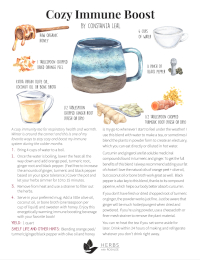
Constanza shares so many ways to help you savor the full magic of this accessible yet often overlooked medicine, including her Cozy Immune Boost tea—a delicious way to help strengthen your immune system during the winter! You can download a beautifully illustrated recipe card from the section below.
By the end of this episode, you’ll know:
► The power of connecting on an intimate level with one herb at a time
► Why orange peel—the whole thing, white pith included!—is even more beneficial to your health than the fruit itself
► A surprising way to work with orange peel to improve your mood (warning: you’re going to get wet!)
► Eight ways to enjoy the benefits of orange peel, from food to medicine to cleaning supplies
► Why herbal powders are such a great way to work with herbs
► and so much more…
For those of you who don’t know her, Constanza Leal is a South American herbalist from Chile who started her journey with herbalism in June 2011 after a hit & run bike accident that changed her life.
In 2016 Constanza launched her herbalism project, Jardín Secreto, after moving to the mountains of Antioquia, Colombia with her husband. Growing food as medicine, wildcrafting, teaching decolonial herbalism and making small batches of medicine for her community became a dream come true.
Since 2017 Constanza has been offering multiple herbalism apprenticeships a year and continues to deepen her relationship with the Tahamie Lands via regenerative agriculture, seed saving, soil microbiology, and biodynamic ways of medicine-making.
Constanza teaches herbalism workshops in South America, in New England, and online through the Gaia School of Healing & Earth Education.
Constanza’s stories and teachings offer such a radiant reminder that even the most familiar plants hold deep wisdom waiting to be rediscovered. Whether you’re brand new to citrus medicine or already love working with it, I hope this episode gives you fresh inspiration to explore, experiment, and enjoy the radiant gifts of orange peel.
Click here to access the audio-only page.
-- TIMESTAMPS -- for How to Use Orange Peel
- 00:31 - Intro to Constanza Leal + Constanza’s herbal path
- 06:23 - Comfrey for broken bones
- 07:54 - How Constanza’s time in South America influenced her herbal practice
- 12:17 - Why it’s so important to follow your herbal inspiration
- 15:57 - The joy of oranges
- 20:06 - Medicinal benefits of orange peel
- 25:16 - Cozy Immune Boost Tea recipe
- 29:07 - Geeking out about mugs and tea rituals
- 34:02 - How to use orange peel
- 37:28 - Constanza’s transition to New England
- 41:20 - The magic of attending herbal gatherings
- 44:34 - What is in Constanza’s herbal first aid kit?
- 51:22 - Student spotlight
- 52:34 - Herbal tidbit
Get Your Free Recipe!
Ingredients:
- 4 cups of water
- 1 tablespoon chopped dried orange peel
- 1/2 tablespoon chopped turmeric root (fresh or dry)
- 1/2 tablespoon chopped ginger root (fresh or dry)
- A pinch of black pepper
- Extra virgin olive oil, coconut oil or bone broth
- Raw organic honey
Directions:
- Bring 4 cups of water to a boil.
- Once the water is boiling, lower the heat all the way down and add orange peel, turmeric root, ginger root and black pepper. (Feel free to increase the amounts of ginger, turmeric and black pepper based on your spice tolerance.) Cover the pot and let your herbs simmer for 10 to 15 minutes.
- Remove from heat and use a strainer to filter out the herbs.
- Serve in your preferred mug. Add a little olive oil, coconut oil, or bone broth (one teaspoon per cup of liquid) and sweeten with honey. Enjoy this energetically warming immune boosting beverage with your favorite book!
i
Connect with Constanza
- Website | SomosJardinSecreto.com
- Instagram | @somosjardinsecreto
- Facebook | Jardin Secreto
Transcript of the 'How to Use Orange Peel' Video
Welcome to the Herbs with Rosalee Podcast, a show exploring how herbs heal as medicine, as food, and through connecting with the living world around you.
Orange peels are revered as this healing plant all around the world, yet we often just simply throw them out. In this episode, Constanza Leal shares the amazing medicine of oranges from supporting the lungs and aiding digestion, to offering brightness and joy through the darkest of times. Constanza drops so much wisdom during this interview from phytochemicals to energetics. I promise you you’re going to be craving oranges all season long, and this episode might even have you showering with oranges. No joke.
If you enjoy this episode, please give it a thumbs up so more plant lovers can find us, and be sure to stay tuned until the very end for your herbal tidbit.
Tired of herbal overwhelm?
I got you!
I’ll send you clear, trusted tips and recipes—right to your inbox each week.
I look forward to welcoming you to our herbal community! Know that your information is safely hidden behind a patch of stinging nettle. I never sell your information and you can easily unsubscribe at any time.
Rosalee de la Forêt:
Constanza, I’m so thrilled to be able to spend time with you today to have you on the show. Welcome.
Constanza Leal:
Thank you so much, Rosalee. I’m so happy to be here with you today. Thank you.
Rosalee de la Forêt:
Yeah, we got to meet in person which was really fun, just a couple of months ago at the International Herb Symposium. Apart from stalking your Instagram and checking you out in those ways, I don’t actually know you all that well, so I’m excited just to hear about your—your own plant story and your plant path.
Constanza Leal:
Yeah, yeah, so my plant path starts with a little bit of tragedy. I find that interesting as well that many folks end up in this path from a big life change or something impactful that takes place. For me, it was actually a cycling accident back in June of 2011 in Boston, which is where I went to school many years ago. I was an avid cyclist at the time. I was really into bike racing. I was involved in a hit-and-run accident that actually gave me a fair amount of fractures, and so that started my journey. It was so beautiful because—in retrospect, of course, at the time I wondered why this was happening to me. Probably in my better years of cycling, I had a whole summer lined up with activities and races and everything, and then getting ran over meant that I would be in a wheelchair for quite a while and unable to bike. I remember being in a hospital bed with all the stitches and all of the things that come with these types of accidents, and wanting something other than morphine because I got loaded up on morphine for a few days, and when I left there, I just sort of made this promise to myself because I felt awful in my body from the withdrawals and everything, to seek out natural medicine.
Luckily, I had a few friends around me who made some suggestions. I leaned heavily into traditional Chinese medicine. I also was turned towards comfrey, which became what to me is essentially this—I would almost call her my “birth worker” or my “doula” or “midwife into my herbalism path” because this plant welcomed me in and healed me in a way that doctors were shocked because they couldn’t understand what I was doing. Symphytum officinale, comfrey, became this incredible support for healing and resetting my bones. Thank goodness I was very fortunate to be in the hands of a good doctor that suggested I see how the recovery goes before any hardware gets put in. And then when I was back in that space, they were in shock, calling themselves to the room to look at the X-rays because they could not understand how my bones had fused back together so quickly and so well. There was not a lot of inflammation. It seemed almost like all of the—everything had worked out in a way that the bones were recovering and resettling.
For me, comfrey became this portal or essentially, an elder to welcome me into this world of natural healing. It was so unreal because, of course, they said, “You will be in a wheelchair for a very long—for at least a month or two. You will not be able to bike again for a year,” and all of these things I was warned about, and then within two or three months, I was completely back to normal. Everything was fine. I never suffered from any pains later on. I mean, it’s just been a miraculous recovery. And so, once I lived that in the flesh of experiencing deep and profound healing with the medicine of the herbs, it was impossible to look back. It was just my life before and after this accident. So that is, essentially, what brought me in and then I continue to dig deeper and started to seek out different schools, whether locally, workshops, started to connect with the local herbalist community.
From there, it just—the path continued to grow into different experiences and journeys, and then fast forward to today, I have been practicing herbalism ever since. I’ve been teaching herbalism for about eight years. I moved to South America, so in Colombia is where I started my school/project which is called, “Jardín Secreto,” and just been growing food as medicine, medicine to make potions for my local community, my friends and family. Yeah, it’s a huge part of my life now.
Rosalee de la Forêt:
Oh, my gosh. I love a good comfrey story. Comfrey just has the best—the best stories. I have to say that has to be one of the best comfrey healing stories I’ve heard, so that’s fabulous. I’m dealing with a little injury myself and I keep meaning to get to the comfrey, and now I’m like, why am I waiting? So, yeah, that’s a very powerful story.
Constanza Leal:
Oh, thank you. Thank you. Such a powerful ally for recovery, especially when we’re working with it cautiously and as close as possible to the injury. I took it internally for only a handful of days and then I made sure that everything else was external use, poultices, and it worked its magic!
Rosalee de la Forêt:
Were you working with the root? The leaf? Both?
Constanza Leal:
Just the leaf. At the very beginning, I actually started taking the—I took a couple of nourishing infusions with just the leaves, and then, eventually, a friend of mine who was into martial arts, actually brought me a blend of—I believe it was—it must have had clay, perhaps honey; different herbs in powder form, but primarily comfrey, to create a poultice that would go around my foot which is where all the fractures occurred.
Rosalee de la Forêt:
That’s so cool. I’m so glad that comfrey welcomed you in. I know you’ve been a gift to your various communities ever since.
I know you’re in transition right now. You’ve just moved back to New England. I would love to just hear a little bit about your time in Colombia because I think that would be interesting to hear—just anything you’d just like to share about what it was like to live there and share plants there, and the community there as well.
Constanza Leal:
Absolutely. I am from Chile. I was born and raised in Chile, so for me, of course, South America has a very special place in my heart, and the Andes, in particular. My husband and I moved—moved back there in 2016. At that point, I had been working with the plants on a more serious level. I had been doing some other trainings. I went to Mexico and trained with Doña Lilia Acevedo, who is a local medicine woman in the mountains outside of Oaxaca. And then once we made it to Colombia, I spent nine months just observing. I was also coming off of working in a very different industry. I worked in law for about ten years. I was an interpreter. So, removing myself from the system and then going back to the homeland, and going back into the mountains. It took me nine months of really listening to the territory, listening to the mountains of Antioquia to understand what my calling was. I was just making medicine as I always do. I was making my elderberry syrups and fire cider. Growing herbs was the first thing that we did as soon as we got there. It was thanks to my neighbors that I started Jardín Secreto because a lot of the folks around us were like, “Why don’t you start teaching us? How do you make this salve? How do you make this cough syrup?”
I started hosting little gatherings in my house to teach small workshops on how to make medicine with things that are abundant in the area, and then from there that started to grow. I started to go to markets. Eventually, I started doing seven-week long apprenticeships, and eventually, started doing a year-long apprenticeship, and then staggering courses, having weekend ones, day ones, and year-long courses. It was so beautiful; so beautiful and so just touching for me to reconnect with my roots to teach in Español, which is all I’ve done the last eight years, and—and also to bring it back because I love to pass on to people the—making medicine and having this medicinal sovereignty. And food—also sovereignty in our eating systems is part of our ancestry. Every—all of our ancestors, at some point, were gathering medicine, and were growing medicine, and were growing food.
And so, so much of my—what felt like my mission and my objective was to share herbalism as something that’s already within us. It’s not elitist and there isn’t a guru or, “Only I can tell you. Only I’m going to gatekeep these recipes.” Instead, I wanted to gather with folks always in a circle that created spaces that felt safe, where people understood that all of us can be herbalists, and all of us can make medicine responsibly, and grow our gardens. This is a way of also living our lives in a more decolonial manner. Growing all of your own food and your medicine is just crucial as a form of resistance to the way that the current modern society can hurt our nervous systems, and disconnects us from nature and who we really are. In the end, which is, we are the children of the earth. So much of that journey for me felt as almost as a mission to share that we can all be making these medicines and tending to ourselves, our communities, and eventually, to our commu—to the people around us and our families. That was—the primary focus for me was to share from the heart in a very humble manner where everyone feels that it’s not scary. It’s not intimidating, but it’s actually almost a birthright to all of us to make medicine and to grow it ourselves.
Rosalee de la Forêt:
It’s so beautiful, Constanza. I really love how that you’re just showing how your love of making medicine led to the next thing, led to the next thing, led to the next thing, and that people were just naturally drawn in. I think the plants are out there pulling people in and just speaking to people, and people wanting that connection. I think it’s so easy for herbalists when they’re just getting started, they want to do something. They want to have this be a part of their everyday life, and then they look at people who have year-long apprentices, have multiple offerings, have this like—they’re like at stage 10 of their herbal manifestation, and they think, “How could I ever get there?” So, I love hearing the stories of like, “I observed for nine months,” “I made medicine. People began to see the medicine and want to know how to do that, and then this was born, and then this was born.” I think following our herbal inspiration along the way is such a powerful way to just be on our own path and create what speaks to our hearts, and our community around us as well.
Constanza Leal:
Yes, exactly. Exactly as you said it, and so much of it is about that inner listening because there’s so much noise right now, especially with herbalism becoming more and more trendy, which is wonderful because we want everybody to be making medicine and growing medicine, but it’s easy to get lost in wanting to do too much, and wanting to fill your house with jars, and wanting to have every possible tincture going at once, and every essential oil, and every—everything because so much of what is sold to us is that, “You need more. You’re not ready yet. You need more things. You need to take more classes. You need to have more books.”
The conversations that I love having with my students is about the intimacy in herbalism and how actually connecting on a very intimate level with one local abundant weed—“weed” I say in quotations—is one of the most profound ways of connecting with that inner wizard, that inner maker, that inner herbalist, which we all have. I have loved, throughout all these years, seeing the moment when it clicks. It’s almost as witnessing them going through the portal of the plants and the spirits of the plants speaking directly to them. They come through on the other side, and they go, “I get it. I have this ability to also listen and to make medicine from a respectful, conscious way. It’s a medicine that feels true and pure and genuine, and not—it’s not about an external thing that we need to fulfill. It’s not about things and capital, but it’s actually about this very intimate, beautiful, spiritual relationship that you have with the land that you end up co-creating with.”
That’s why my project is called, “Somos Jardin Secreto.” We are secret garden because—and people have asked me, “Why is it ‘somos’ if it’s just you?” I say it’s not just me. It’s me and the plants. I wouldn’t be able to make any of this if it wasn’t because of their wisdom and their generosity, and this beautiful exchange that we have because we’re tending to each other. I tend my garden, but my garden is tending me as well. It is so sweet to be able to witness that when my students arrive in that place of certainty in knowing, “Okay, these are my allies. These are my people. These plants, we grow together.”
Rosalee de la Forêt:
So beautiful.
We’re about to enter into citrus season and you chose citrus peels. What you want to share with us today, I’m very excited about that because I’m very much looking forward to the citrus season. Really looking forward to the recipe you’ve shared with us too, but we don’t have to get ahead of ourselves. I’m curious what about citrus peel called out to you for being on the show today.
Constanza Leal:
So, I have not lived through a winter in almost ten years, and so, coming back to New England, I am bracing myself and preparing myself emotionally to receive these 3:00 P.M. sunsets, and long, long nighttime hours. I’m sort of bracing myself for being in contentment in the darkness, which I have also missed and craved. I recently did a plant meditation with my students with orange peel. I took them through this journey and I couldn’t stop envisioning just the center of myself becoming this radiant ball of warmth and light. Orange, to me, an orange peel, is just this beautiful symbol of lightness; its affinity with the sun and fire and sweetness and inspiration to move and to feel joy even in the midst of darkness. I also associate that smell of toasty orange peel with winter. What I remember in New England winters is always right before Christmas, cutting up slices of blood orange or bitter orange or any orange, really, any citrus, to hang and position it as garlands throughout the house. It’s traditionally been such a festive, beautiful fruit, and so that’s why I felt called to talk about orange because it’s a little bit underrated too.
When we think of—I mean, there are so many rock stars in the herbalism world, but orange peel, it’s almost like the light of the party. You have a tea blend that’s got nettle and tulsi and dandelion root, and you throw a little bit of orange peel in there, and it’s like whoa! It’s bright. It’s cozy. Its warmth is stimulating to your digestion. It’s phenomenal for your immune system. That pectin presence as well just make—just has so many amazing benefits. For me, orange peel has always been this catalyst for most of the blends that I make. Most of the tea blends, I always throw orange peel in there because I find that not only does it throw it together, but also, it’s going to have an effect over our cardiovascular health. It distributes the medicine of all the other herbs even better in a more deep, profound, beautiful way. Of course, aromatics. I just love orange peel so much I could talk about it all day.
Rosalee de la Forêt:
I’m glad. I love the way you described orange peel as like the radiance and the light because it instantly made me think that I really turn to orange, especially in January, because that’s when the winter starts to kind of hit me. Even though we’re past this winter solstice, it’s dark. It can be dreary, and there’s something about having—we only get really good citrus where I live in the wintertime, so it’s this special seasonal thing. I order mandarins direct from a farm in California. We get boxes of them. It’s like my job for a couple of months to eat as many as I can and gift as many as I can, and just enjoy them. They really do bring radiance and light and a new flavor that just is so needed during that time, for me, of just when a time that can feel kind of monotonous. We have snow here, so it’s just white, white, white, dark, dark, dark. It brings a joy. It definitely brings a certain amount of joy, so I loved everything you shared in that way.
I love that you say “underrated” too because it makes me think of Chinese medicine and Chinese medicine reveres orange peel. This is a very highly-regarded medicinal. Just because we buy it at the grocery store doesn’t mean that this is a weak herb, by any means. This is a powerful herb. The fact that you add it to all of your teas, it says a lot right there.
Constanza Leal:
Yeah, yeah. I think one of the other things I love about it is that it’s pretty accessible depending on where you are in the time of year. And of course, we recommend that you always go for your organic citrus peel since you’re going to work with the exterior part. It’s pretty accessible. Folks think, “Oh, Vitamin C,” and orange juice, but there is twice as much Vitamin C on the peel of the orange, more so than what’s in the center. We tend to peel away the white stuff when that’s where all of that incredibly medicinal and valuable pectin is. Its fiber is amazing for your digestion; mucous membranes, in general. Also, talk about winter coming and preparing and loading ourselves up with a little bit of immune stimulants. It’s a phenomenal expectorant. I also love it before or after eating. It’s a wonderful carminative. I find orange peel to be so complete, and also, it has this gorgeous duality because, of course, it—the flower of citrus has some very peculiar and beautiful properties, and how it tends to be more ethereal, and it’s much more of a relaxant nervine. It makes us—puts us in this really feel good, very sensual, beautiful mood. The orange has more—and I don’t want to use binaries, but it tends to be more—almost the more “masculine.” I say that in quotations [unclear] masculine, of the doing and the motivation, and the fire, and the drive, and it sort of gets us out of our darkness.
I don’t know if any of you have ever practiced this, but when you’re in a rut and you feel that you’re struggling to really get up and going in your day, I find that there’s nothing better than going in the shower, taking a hot shower with an actual orange in there. You can even peel it. Just the very aromatherapy has—it sends instantly this message to your brain of like, “Okay, we’re up. We’re going. I’m motivated. I’m going to get this done.” It’s very, very soothing and impactful and inspiring to all of our senses, whether it’s aromatherapy or you’re taking it as tea, or you’re having a little bit with your—for a snack. I just love orange so much.
Rosalee de la Forêt:
Oh, my gosh, Constanza. Taking a shower with an orange? That’s a first for me. I will say I have a friend who taught me about eating really ripe, juicy mangoes in the shower, and I was like, “Oh, that’s brilliant!” actually, because there is such a mess, but the aromatics—so, I have heard of this concept, the fruit in the shower before, but never an orange. That’s interesting—peeling it, and yeah, just having that freshness. I feel like it’s such a great tip for me in the wintertime. I’m already starting to feel that kind of the darkness of winter and needing to find the light within to make it through. Alright, citrus in the shower—listeners, definitely let us know. I want to hear about. You don’t have to give us a lot of details, but I definitely want to hear some details about the orange in the shower.
Constanza Leal:
Yeah, just keeping them around. I just love all the ways that orange can show up for us.
Rosalee de la Forêt:
Yeah.
Constanza Leal:
It elevates—it can elevate sperm count. It has incredible phytosterols as well, especially present in the white part of the peel. You can go on and on about all the ways that orange peels and citrus peels can heal us, in general, but all of the—the symbol behind it. Fertility, it’s the fruit. It’s got the memory of the seed, so it’s tied to love and divinity for so—hundreds and hundreds of years, and also being native to Southeast Asia, if I’m not mistaken, or the south of China. It is—I find that it’s more renown, more recognized for all of its—all of the ways that it holds us and heals us, but we could all use so much more of its magic in these darker months of the year.
Rosalee de la Forêt:
Thank you. You’ve shared so many medicinal gifts that I just want to go back over a couple of them, so we really get to sink in. You mentioned it is a expectorant, which is such a lovely use of orange peel helping get rid of the congestion, especially our lungs. You also alluded to this also in our digestive system. It’s also wonderful carminative as well. It’s so lovely that we can work with that in food as a carminative. Or we can, like you’ve mentioned, teas, a bunch—teas helping with the decongestion, and your “cozy immune boost tea” sounds so lovely. I’m really excited to try it out myself. You have just a wonderful collection of herbs here. I wonder if you will just walk us through the recipe of it. For anybody who wants the recipe, you can go to herbswithrosaleepodcast.com. Check out the show notes, there will be a link and you can download this beautifully illustrated recipe card. But I’d love to hear about the recipe from you.
Constanza Leal:
Yes, of course. I love, l love a good decoction of immune stimulant, warming herbs. This one in particular, you can modify it based on what you have available. That is the best medicine, is what you have at home, not where you have to go ordering online or getting from far away. I really love working with roots and spices, and of course, orange peel in there as a decoction to really warm up the systems, acts as an expectorant, and stimulate us—stimulating our immune response.
This one in particular, I love to work with turmeric root, ginger root, black pepper – those three working really together as a team because, of course, the black pepper is going to help our bodies better absorb the curcumin. And then, if you have it and if you’re able, you can throw in there some of our phenomenal medicinal mushrooms. I love to throw a little bit of reishi in there, and then also, of course, our gorgeous orange peel, as the final touch to really give it that beautiful aromatic, although all of them are going to have that warming effect and move our circulation.
Essentially, you’re making a 15 to 25-minute long decoction of all of these. On the recipe card, you’ll find the specific amounts, but what I like to work with at home is one to two spoonfuls of plant material, and then I put that in a quart of water. I cook it on low for 15 to 25 minutes; definitely make sure it’s covered so all of those beautiful volatile aromas will stay in place, and then filter it and drink up. And then occasionally, if I want to feel extra fancy and I have extra time, I will filter it and then I’ll put that over tulsi, or if it’s during the daytime and I want a little pick-me-up, I will also use yerba mate and then drink that. I use the base, the decoction, and then put that over the softer plant material, and then drink that directly. It’s just such a wonderful protective blend that you can—it’s a small precaution that you can take everyday, so make sure you have these herbal medicinal rituals incorporated into your day to make sure that your body is staying healthy and ready to respond as soon as you are confronted with any other viruses or bacteria.
Rosalee de la Forêt:
I love that you call it “cozy” too because it just sounds cozy. You also mentioned olive oil, coconut oil or bone broth, so I’m curious about that.
Constanza Leal:
Yes. So, my husband and I often will add a little scoop of either olive oil—I love working with olive oil. That within itself is incredibly antioxidant. I think we should all be having a little spoonful of it everyday. We’ll add into our teas a little bit of olive oil or bone broth, and really, that helps our body better absorb all of these nutrients, particularly those of turmeric. Whenever you are having turmeric tea or a decoction or ingesting it in any way, you want to make sure that you’re doing that with—with some sort of fat so that your body can have an easier time digesting it and absorbing all of the medicinal properties, and not just a little bit of it.
Rosalee de la Forêt:
Lovely, and it sounds delicious, actually, just giving this possibly savory aspect to it as well. I also really appreciate that this recipe calls for your favorite mug because I feel very strongly that that’s super important.
Constanza Leal:
So important. I can’t even tell you—there’s something about—my grandmother has always said this to me. She goes, “Things just taste better when they’re in your favorite mug or your favorite teacup,” so I live for that.
Rosalee de la Forêt:
Absolutely. I have two favorites right now, and I just go back and forth. I love finding a new favorite, like going to a pottery shop and picking up a mug and just be like, “Oh, this is my mug.” You just know this is it.
Constanza Leal:
It spoke to me. This is my mug. I also—I don’t know about you, but I have my favorite mug for tea, and then I have my favorite mug for coffee, and those two do not mix
Rosalee de la Forêt:
There’s actually different kinds of teas too, you know.
Constanza Leal:
Nourishing infusion gets this one specific jar and this mug, then my enjoyment during the day, all my stimulating herbal drinks. It’s incredible how much—I love to see sometimes—just to know—to get to know a new herbalist friend, like, “How many cups of tea do you have a day? How do you—what do you usually have? What are your rhythms?” because I know in our household, we start with nourishing infusions, and then we move into green teas, and then we have coffee, and then we have stimulating, and then later on we have relaxants. It’s an all-day thing.
Rosalee de la Forêt:
Props to you for starting with the infusion. That’s—definitely, I wake up to the black tea myself. I have been really on a strong nourishing infusions kick, so that’s kind of like midday.
Constanza Leal:
Oh, yeah, yeah. No. I find that it gets our systems going and warming it up.
Rosalee de la Forêt:
I have no doubt.
Constanza Leal:
And once you—once you start doing it everyday, it sort of becomes this very—this part of your ritual. It’s not just, “Okay, I’m getting up and I’m having a glass of warm water.” It’s like—then your body almost reminds you. It has the memory. It’s like, “Whoa! Where is my—where is my nourishing infusion and where is my follow-up green tea?” And then, of course, we have days we don’t do it, but for the most part we try to.
Rosalee de la Forêt:
I do strain my nourishing infusion. That’s one of the first things I do in the morning, so now I’m inspired to just go for it even if it’s not the whole thing at first. I like that. I’m still not giving up my black tea first thing in the morning.
Constanza Leal:
Yeah. I read somewhere a while back—and it kind of changed my life, to be honest—just how detrimental it can be when we load ourselves up with caffeine right away first thing in the morning because our body-
Rosalee de la Forêt:
It’s so true. I should actually say, I have to eat first. I can’t eat caffeine on—I can’t drink caffeine on an empty stomach, so yeah, I have to. Even when I go to restaurants for breakfast because I’ve been traveling a lot, so I’ve been going to breakfasts—out to breakfast, I had to tell them I would like tea but after my meal because I’ve learned too much I get it before the meal and it gets cold because I won’t drink it until I have food in my belly. So, I’m with you on that one 100%.
Constanza Leal:
I’m the same way. I can’t. I have to eat first, and then wait until I’ve been up for at least two hours before my first little—little boost of caffeine.
Rosalee de la Forêt:
A more grounded approach to this lovely constituent.
Constanza Leal:
I love it.
Rosalee de la Forêt:
I’ve actually been really into drinking a reishi decoction with spices like ginger and cinnamon and everything, so it’s very reminiscent of your cozy immune tea but I’m looking forward to trying something new. I think, again, just with the winter settling, it’s so much fun to have new things to try, exciting new tastes, things like citrus that wake you up in a totally different way than, say, caffeine would. It’s just going to be lovely and I can just imagine cozying up with it on a book—with a book on a lovely Saturday afternoon.
Constanza Leal:
Absolutely. I love that.
Rosalee de la Forêt:
Hey, it’s Rosalee. You know, creating this podcast has been one of the most rewarding parts of my herbal work, and if you found something meaningful here, whether it’s a new perspective, a favorite recipe or just a sense of calm, I want to let you know there’s a good way to go even deeper. It’s called the “Podcast Circle.” Inside, you’ll get access to live classes taught by some of my favorite herbal teachers, behind-the-scenes updates, and a beautiful library of herbal resources that we’ve gathered over the years. But more than that, it’s a space to connect with fellow plant lovers who care about the same things you do, and truly, your membership helps make this podcast possible. It’s how we keep the episodes coming and the herbal goodness flowing. So, if you’re ready to be part of something more, something rooted in connection, head over to HerbalPodcastCircle.com. I’d love to see you there.
Rosalee de la Forêt:
You’ve shared so much with us already about your love of citrus and oranges. Is there anything else that you’d like to add to that?
Constanza Leal:
No. I was just going to mention that I love looking for ways to utilize everything in the kitchen. We have—our daughter is five and she also loves her clementines and little oranges. There is something that brings me so much joy about using all of it and saying, “Let me—let me see the peels. Let me keep those. Let me dehydrate them or utilize them or throw them in my tea,” or coating them. If you want to be extra fancy and have the time and the resources, also coating them with delicious, melted 70% cacao or chocolate, and then having that as a little treat. It’s a lovely dessert! Just the joy around utilizing all of our food, and not letting these precious things go to waste.
Rosalee de la Forêt:
I love that. As I mentioned, we get boxes of citrus and so we have lots of peels from an organic farm. I use peels a lot. I use the whole fruit, but especially, the peels in bitters blends, and I love to infuse them into vinegar as a cleaner. All of my—pretty much only use a white vinegar as a cleaner, but I infuse the mandarin into that and that’s lovely—citrus cleaner, better than anything you can buy at the store and way less expensive, so I’m with you on this. It’s so much fun just to be able to work with the—the whole plant. I often just think, how many peels get thrown away? It’s just this incredible, wonderful medicine that’s tasty and fun and-
Constanza Leal:
Yeah. Thank you for mentioning that. It almost slipped my mind to say how incredible it is as an antiseptic and also antibacterial. The—because it has such a high concentration of limonene—I think you pronounce it—and that is a monoterpene that has phenomenal antibacterial properties; so yes, definitely awesome to make your cleaning supplies of all your citrus peels at home and white vinegar. That’s great.
Rosalee de la Forêt:
I’m just thinking of it too. I love it as a powder, citrus peel powder, for doing the fun things like making your own truffles, and then rolling them in citrus peel, or I make little digestive pastilles, put those in citrus peel. I often do it with salt—citrus peel and salt. There’s just so many ways to enjoy citrus. I love what you said too, it’s just so accessible. It’s fun. It’s beautiful. It’s radiant. I love that you used that word.
Constanza Leal:
It’s a little ray of sunshine and I think that—you know what’s better than things that are easily accessible for all, no matter what or where you are? That is a big, big, big part of my practice in the way that I show up in this realm of herbalism, is how do we make this accessible? How do we make this for everybody? How do we make this as inclusive as possible? Working with plants or fruits and medicines that are abundant or easily accessible by all, I think, is such a gift within itself to be able to say, “Yes, I have that! I have that at home,” or to make medicine with something that we can all find easily in the store I think is great.
Rosalee de la Forêt:
Absolutely. Well, you are in a place of transition right now, moving from Colombia, now in New England. I know you’re—you’re kind of restarting, which I think is a—a fascinating time to catch somebody. What is that like for you? What is that like, this—the moving, the transition, the waiting time, the dreaming time, the envisioning time? Whatever you’d like to share, Constanza.
Constanza Leal:
Thank you for this question because it helps me pause and really feel the process of transition in my body. I want to honor just how hard it is. Transitions are hard! Transitions are hard on our nervous system. Transitions are hard on just our overall state—emotional state. I am a Taurus. I am very homey. I’m a nester, and so for me, being ripped away from home and the spaces that I have tended to for so long, is something that is not easy for me, especially leaving my gardens that I have been growing all these years. It’s an adjustment, and also, of course, in terms of different weather, readjusting to so many things that we hadn’t felt in—in almost ten years, it can be hard.
And so, I’m finding myself often outside. I am going hiking as much as I can. I am watching and really just absorbing as many sunsets as I can, moon rises, being close to the ocean, being by the ponds, listening to the birds; and that, for me, has been the most grounding and most beautiful, soothing way of arriving. We are also very privileged to be one of the most beautiful places on earth, at least, for me, this little beach town has held us and—and welcomed us with nothing but beauty and joy. And so, every day I try to take it easy and just sort of be patient; be patient in how the roots will take place and deepen over time. I’m also pretty impatient. I am—I have a lot of dreams and things cooking in my—in my head and in my heart. I’m excited for a lot of things and I also think it’s perfect that we are arriving in this time of year because it will give me time to go inward and to truly connect with what my mission is here, and how Jardin Secreto can sprout again into spring. We’ll see. Every day is full of magic and lots of dreaming, as you said, and also, a little bit of impatience because I am excited to just unpack my suitcases, finally, and—and get settled.
Rosalee de la Forêt:
Impatience driven by excitement—there’s something excruciating about that, but also, there’s an excitement to it of just the—the new beginning.
Constanza Leal:
Yes, yes. The plants here are constantly speaking, just the junipers and there’s all the scrub pine, and there’s so much. Sweet fern has been really, really showing up for me so much in all of the hiking, tons of mushroom foraging. The boletes were very generous this past fall—I mean this fall.
Rosalee de la Forêt:
That’s fun.
Constanza Leal:
So, it’s been—it’s been tender and gentle and full of gifts and—and we’re waiting. We’re excited.
Rosalee de la Forêt:
And you mentioned too that you might want to be looking at conferences next year and teaching at various conferences, which I did not get to take your class at IHS because I was working on another project. I—word of mouth spread about your class. It was a powerful one. I talked to one person who cried in the most beautiful of ways, so yeah, it was very touching, very powerful. I would love to see you at another conference, so we should stay in touch so I know where you’re going and check you out there.
Constanza Leal:
Definitely, definitely. I am very excited for this next spring and summer and connecting with the local communities of herbalists. There’s such an amazing, robust community of medicine makers here in New England, and also where you are. I got to meet so many wonderful folks out at the conference where we met, and I just—it was such a beautiful, heartful space. Heartful is the word that I—all I can think of because we—there’s something about gathering around something that’s so precious to all of us – the medicine of the herbs and how the ancestors have continued to bring this forward for all of us. All of us connecting, gathering around this wisdom is so, so, so dear to me, so for this next year, I am really hopeful to be connecting with Steph Zabel, who is one of my dearest mentors and also a friend, who organizes Herbstalk, which is a beautiful and fabulous herbal conference that happens in June every year. I’m excited for that and check in with them and whether I’ll be teaching or visiting, but also, there’s lots of different things happening throughout the country in the summer and in the fall. I’m hopeful to be reopening my school and to be offering short seven to five-week long apprenticeships where we meet just once a week, probably on a weekend day. And then, I am also an alumni of the School of Gaia, which was founded by Sage Maurer in Vermont—in Putney, Vermont. Shout out to Sage. She is my dearest friend, and also an incredible mentor that I just have so, so, so much love and respect for. I am part of the school. I am one of the teachers, so I will be possibly offering those courses as well, here, locally in the area where I live now.
Rosalee de la Forêt:
It’s wonderful. For folks who want to hear more from you, what’s the best way to find you, get in touch with you, etc.?
Constanza Leal:
The best place right now would be my Instagram account, although I have quite been dormant recently due to our move. SomosJardinSecreto, all together, is my Instagram name, and that is where I share most of the news of what I’m doing next, and then also, on my website, which is the same, SomosJardinSecreto.com.
Rosalee de la Forêt:
Absolutely beautiful imagery there. For Spanish speakers, at least, right now, there is lots of beautiful writing to go along with that as well. Thank you for sharing that.
Before you go, I’d love to ask you one last question, and that question is, what is in your herbal medicine kit?
Constanza Leal:
Right now, I don’t have one because I’ve just recently moved, but the thing that I often think about whenever I am asked to create or conspire a medicinal kit, it’s always herbal powders. So super easily: a. accessible, b. easy to transport, and, c. so potent and wonderful to incorporate in so many different ways because you can have an herbal powder that you can easily mix with water. You can either make a tea or you can mix with honey, or you can simply put it directly on your wound, depending on what your—what your needs are.
I think often about yarrow powder form to keep in your kit, your medicinal kit, because yarrow is such an incredible potent ally for so many different ailments. For starters, being wonderful for cuts and scrapes. It stops bleeding. It is an antiseptic. It is phenomenal for scar tissue. It is also wonderful internally. I mean, talk about it being a wonderful diaphoretic, phenomenal if you’re exposed to a virus. There are so many different ways.
If you have the powder form, usually, when you go to a medicinal kit or an emergency kit, it’s because you’re having an emergency and you need it to act fast. In the powder form, you can just mix it in real quick, and then take it in. I love the idea too of—for kiddos, especially. If somebody is stung by a bee or has a little cut, you can easily mix the herbs—the powder form herbs with a little bit of honey and create, essentially, a natural band-aid, and that will be a wonderful little curita, a little antiseptic, little band-aid. For those powdered herbs that I would keep—keep in an emergency kit, it would be definitely yarrow, definitely powdered ginger as well, in case we’re talking about digestion issues or also nausea. Definitely, love raspberry leaf in powder form. Raspberry leaf, we, of course, associate with women’s reproductive health; wonderful for postpartum, for pregnancy, for preparing to give birth, etc. Also, it’s an awesome astringent. With these drying properties, we can also incorporate that over a wound. If there’s a ton of really moist, wet cough, we can have some raspberry leaf as well, with a little bit of rose. So many ways that it can be incorporated. And then, my beloved nettle. Stinging nettle should be everywhere. We should all have it in all possible ways. Powder form stinging nettle, just having a handy antihistamine when needed is wonderful as well for safety for all, because you never know when somebody could have an allergic reaction. Of course, more potent would be nettle tincture, but I’m just thinking of things that don’t break; things that are easy and light to carry. I’m envisioning myself traveling and doing a long hike, and like, what’s the easiest thing to carry with you? Last, but not least, cayenne pepper. I find cayenne pepper to be amazing and crucial cardiovascular health. Somebody having a heart attack, you better make sure that you’re having a cayenne pepper either in powder form or as a tincture to provide first aid. I mean, this is talking in the midst of a grand emergency, but having heart support, heart health for anybody who might need it.
Rosalee de la Forêt:
I love that you’re highlighting powders because I often feel like powders just don’t get the respect in the herbal world. They’ve—I think there were just so much poor quality herbal powders on the market for so long that they were rightfully dismissed in that commercial regard, but I love powders because it’s—when we have—when we take whole powders into our body, it’s one of the—or whole herbs, but it’s like the one of the only times we’re taking the whole herb in, it’s not like a water extraction like a tea, it’s not an alcohol extraction like a tincture. We’re getting the whole herb and then our incredibly intelligent bodies get to figure out how best to work with that. Then, like you said, just super practical. They are really easy to carry around, so I love it. It’s definitely the first time I’ve had that response to this question, so it’s a good one.
Constanza Leal:
Awesome! Awesome. I’m so glad. Circling back to the immu—the cozy immune stimulating recipe I mentioned, another one of my favorite powders to always keep together and keep them around, is a blend of ginger, turmeric, and black pepper, because you can so easily make a honey paste with that. Actually, I’ve turned all my family members to this because, of course, my mom, my mother-in-law, they all have these powders in their cupboard, in their kitchens. So, whenever anybody is feeling a little bit under, just mix honey with turmeric, black pepper, and ginger together. Obviously, a pinch of the black pepper just to really get your body to absorb the curcumin. It’s so easy to mix together and just take a spoonful, and the same goes for kiddos who don’t want something bitter or spicy, but you give it to them with honey, and they’re totally fine. Electuaries are top, top, top medicines for me because if you—as long as you know that the powders of the herbs are fresh, I, personally, recommend using them under a year. Once they start to lose their color and they’ve been exposed to oxygen, of course, they—they lose some of that potency, but that first year, they’re phenomenal! They’re so useful. You can use them in so many ways. I love that you mentioned that we’re using the full plant. We’re not extracting just the vitamins. It’s the entirety of it. It’s the fibers. It’s the chlorophyll. It’s all of the medicine.
Rosalee de la Forêt:
Yeah, lovely. This has been just absolutely wonderful. Thank you so much for taking the time to hang out with us, for sharing so much wisdom about citrus. I would say “wisdom” and just like inspiration and enthusiasm because now, I just want to go get my mandarins and start working with them, everything from hanging the slices up in the window for festivities, to making this wonderful cozy immune tea.
Constanza Leal:
I love that. Thank you so much. Oranges for the joy—for the joy for all of us as we go deeper into winter, and thank you so much. It’s been so much fun. It’s been such a pleasure to talk with you.
Rosalee de la Forêt:
Yeah, likewise. Thank you.
As always, thank you so much for listening. You can download your illustrated recipe card from today’s episode just above this transcript. If you’re not already subscribed, I’d love to have you as a part of this herbal community, so I can deliver even more herbal goodies your way.
Tired of herbal overwhelm?
I got you!
I’ll send you clear, trusted tips and recipes—right to your inbox each week.
I look forward to welcoming you to our herbal community! Know that your information is safely hidden behind a patch of stinging nettle. I never sell your information and you can easily unsubscribe at any time.
This podcast is made possible in part by our awesome students. This week’s Student Spotlight is on Mercedes in Wyoming.
Mercedes joined the Herbal Energetics Course in 2024, and her reflections quickly stood out for their depth and insight. She really brings curiosity, joy, and care to her herbal studies—exploring each flavor through both her intellect and experience.
In her sweet module, Mercedes shared how marshmallow soothed her cough and also how it really shifted her perspective on sweetness—from something that can be seen as overbearing to something that’s nourishing. In the pungent module, she discovered how herbs like ginger, fennel, and rosemary really transformed her sluggish digestion and deepened her appreciation for her spice cabinet.
Mercedes’s reflections are full of wonder and warmth—a reminder that herbalism is really this lifelong journey of discovery, connection, and delight.
To honor her contributions, Mountain Rose Herbs is sending Mercedes a $50 gift certificate to stock up on their incredible selection of organically and sustainably sourced herbal supplies. Thank you so much to Mountain Rose Herbs, for supporting our amazing students!
Okay, you have made it to the end of the show, which means you get a gold star and this herbal tidbit.
Well, for this herbal tidbit, I have a mixture of little things to share with you. First, I want to share how I met Constanza. I was teaching at the International Herb Symposium this year, and everything went wrong. First of all, I just was not feeling well that day at all. I actually thought I was going to faint that morning. Big shout out to Lindsey Feldpausch for taking care of me so well. And then when I checked out my classroom earlier in the day, I saw that it was in this pretty small space shared with the vendor area, and there was only 15 chairs. Knew that wasn’t going to work, luckily, friends jumped in and got support for bringing in more chairs, and then I showed up early to my class, like 45 minutes early. The tech guy was there and I was like, “Hey, could we get my slides up?” and he said, “Oh, it’s way too early. You got 45 minutes, don’t worry about it,” and so, I walked around a bit, and then I showed up again. I can’t remember, maybe 20 minutes early, and said, “Let’s get my slides up.” I just know these things can go wrong, and they did.
Long story short, they never figured out the tech needed to get all the slides done. This wasn’t the International Herbs Symposium, folks. This was like the place, whatever, the building folks. Anyway, they just couldn’t figure out what was wrong. They couldn’t get it to figure out. Once I started teaching, it was—nobody could hear me because it was too loud because we’re in the vendor area. Anyway, it was a total mess. We ended up making it work in the end, but class did start an hour—20 minutes late, I don’t remember. There’s only one hour of class, and we were 20 to 30 minutes late. Luckily, I’m not new to tech problems, so I just kept my cool, did my best with what I had.
Actually, I think it went pretty well in the end, but my first interaction with Constanza was that she was sitting right in the center of the audience. Every time I looked at her, she had this radiant smile that was just so lovely and so encouraging. It was like—it just felt like all this stuff wasn’t working, and then there was this beautiful smile. She wasn’t the only one. There are so many others that I just felt like we came together and just propped up that class energetically, and then all together, we pulled it off. Yeah, it was an experience, but later, I got to meet Constanza in person. As you—as you’ve just experienced, she was just so grounded, so lovely. That was a really memorable way to meet somebody. Just thinking about that, that was some of my favorite moments at the International Herb Symposium this year, which is meeting so many truly kind and wonderful people. So, shout out if you are one of those that I was lucky enough to meet this time around.
Another random tidbit is that I told my friend, Mason, that I mentioned the mango in the shower thing, but I told him I kept his name out of it since maybe I shouldn’t shout out that he’s a shower-mango-eater, but he said he was all about it. He’s a very proud shower-mango person, so full credit goes to Mason from HerbRally for sharing all the joys of mango showers. And then the last random tidbit I have, I thought I would circle back round to oranges for you. I just wanted to give a shout out to orange blossom or neroli hydrosol. This, if you really force me to choose a favorite, I might say this is my favorite hydrosol. I have a bottle of it beside my bed and I often spritz it on just before bedtime. I highly recommend it.
Well, as always, thank you for joining me in this episode. I’ll see you in the next one.
Rosalee is an herbalist and author of the bestselling book Alchemy of Herbs: Transform Everyday Ingredients Into Foods & Remedies That Healand co-author of the bestselling book Wild Remedies: How to Forage Healing Foods and Craft Your Own Herbal Medicine. She's a registered herbalist with the American Herbalist Guild and has taught thousands of students through her online courses. Read about how Rosalee went from having a terminal illness to being a bestselling author in her full story here.